
How A Sea Turtle Cleaning Station Works - On Metal, Acrylic, Canvas, and Photo Paper Prints
The Magic of a Turtle Cleaning Station
There are moments in the ocean that feel almost choreographed. Not staged. Not forced. Just perfectly designed by nature. One of those moments for me was witnessing a turtle cleaning station in action.
As a photographer, I spend a lot of time underwater observing behavior. Sometimes you are searching for wildlife. Sometimes wildlife finds you. But when you come across a cleaning station, you are stepping into a living, breathing ecosystem where every species has a role.
What Is a Turtle Cleaning Station?
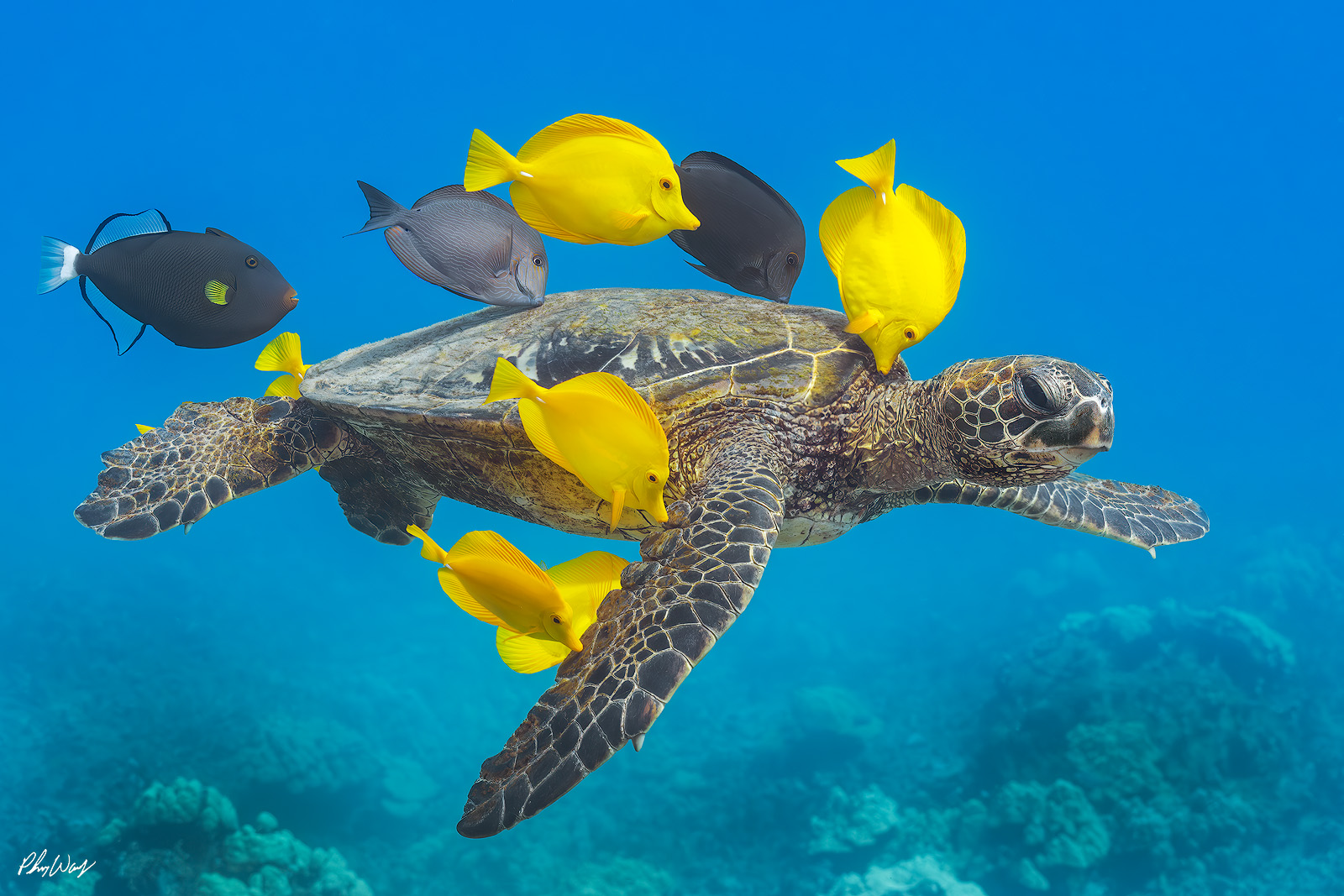
A turtle cleaning station is a specific reef location where sea turtles pause to allow small fish to clean them. These fish remove algae, parasites, dead skin, and other debris from the turtle’s shell, flippers, and even inside their mouths.
It is one of the ocean’s most fascinating examples of cooperation. The turtle hovers calmly, sometimes closing its eyes, completely relaxed while the fish get to work.
It is a spa day in the wild.
The Symbiotic Relationship Explained
This interaction is called mutualism, a type of symbiotic relationship where both species benefit.
The fish benefit
They get a reliable food source. Parasites, algae, and dead tissue become a steady meal.
The turtle benefits
It stays healthy. Removing parasites reduces infection risk and improves overall shell condition. A cleaner shell also reduces drag, which helps with swimming efficiency.
Everyone wins.
One of the most iconic participants in these stations is the Green sea turtle. Green sea turtles often return to the same reef areas repeatedly, almost as if they have an appointment.
Watching a massive ancient creature like this remain completely still while tiny fish swim fearlessly into its mouth is surreal. There is absolute trust.
What It Feels Like to Witness It
The first time I truly observed a cleaning station, time slowed down.
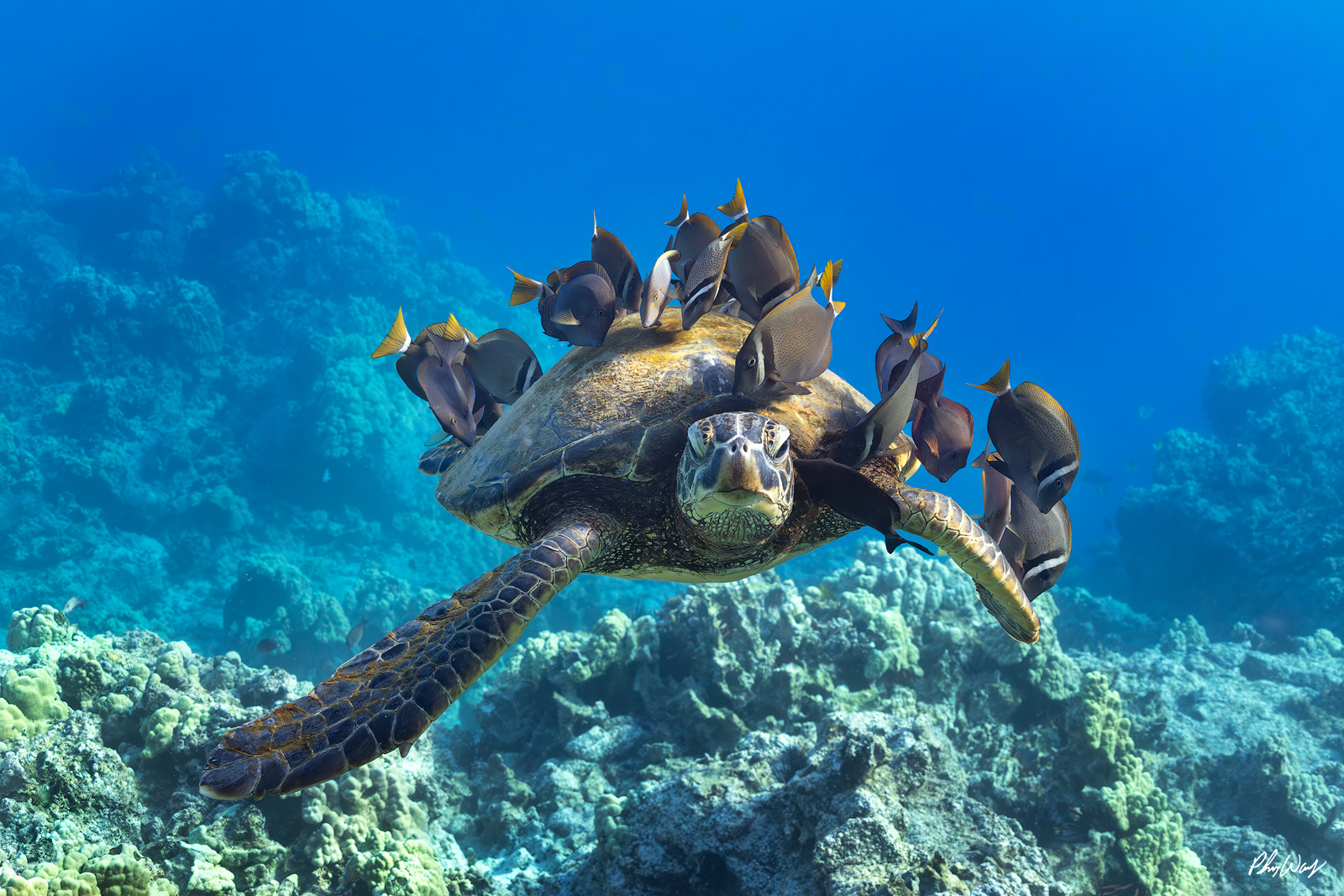
The turtle approached slowly, then hovered just above the reef. Within seconds, fish surrounded it. They moved with precision, almost like a coordinated team. The turtle lifted a flipper slightly, adjusting position so the fish could reach underneath.
It was not chaotic. It was calm.
As a photographer, these moments are gold. Not because they are dramatic, but because they tell a deeper story. The ocean is not just predator and prey. It is partnership, balance, and interdependence.
When I capture these scenes, I am not just photographing a turtle. I am documenting a relationship that has existed for thousands of years.
Why Cleaning Stations Matter
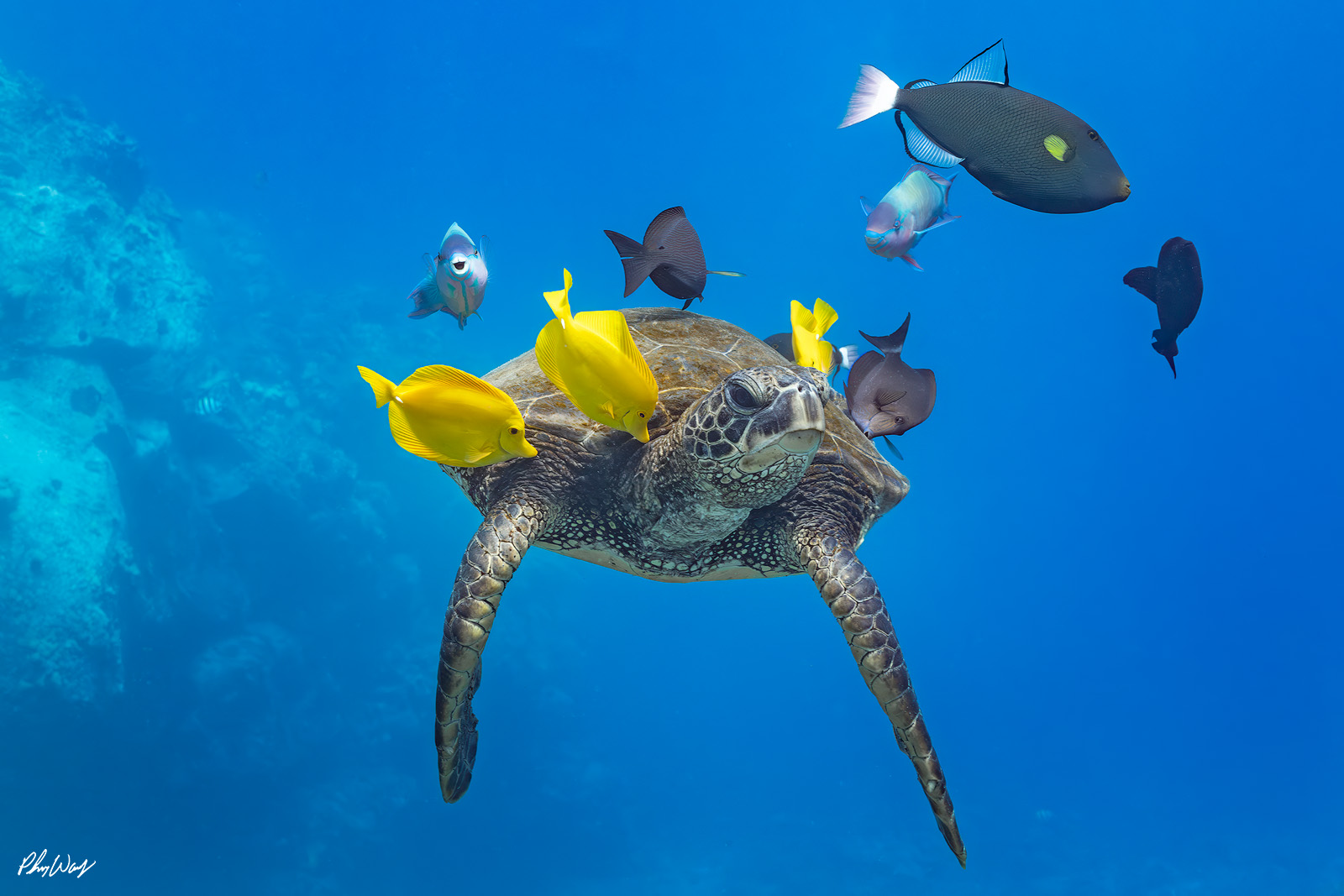
Cleaning stations are essential to reef health. They support:
- Biodiversity
- Disease control among marine life
- Long term survival of larger species like sea turtles
- Reef ecosystem balance
If cleaning fish populations decline, it can ripple outward and affect larger marine species.
These stations are reminders that even the smallest fish can play a massive role in the ocean’s survival.
A Lesson from the Reef
Every time I photograph a turtle at a cleaning station, I am reminded of something powerful.
Strength does not mean independence. Even one of the ocean’s most resilient creatures relies on help from something much smaller.
The reef thrives because of connection.

And when you are lucky enough to witness that connection firsthand, camera in hand, you realize you are not just documenting wildlife. You are documenting harmony.